If you have POTS or dysautonomia and you also have a stiff, tight, or painful neck, that might not be a coincidence.
The cervical spine plays a direct role in how your body regulates blood flow and autonomic function. Here's how.
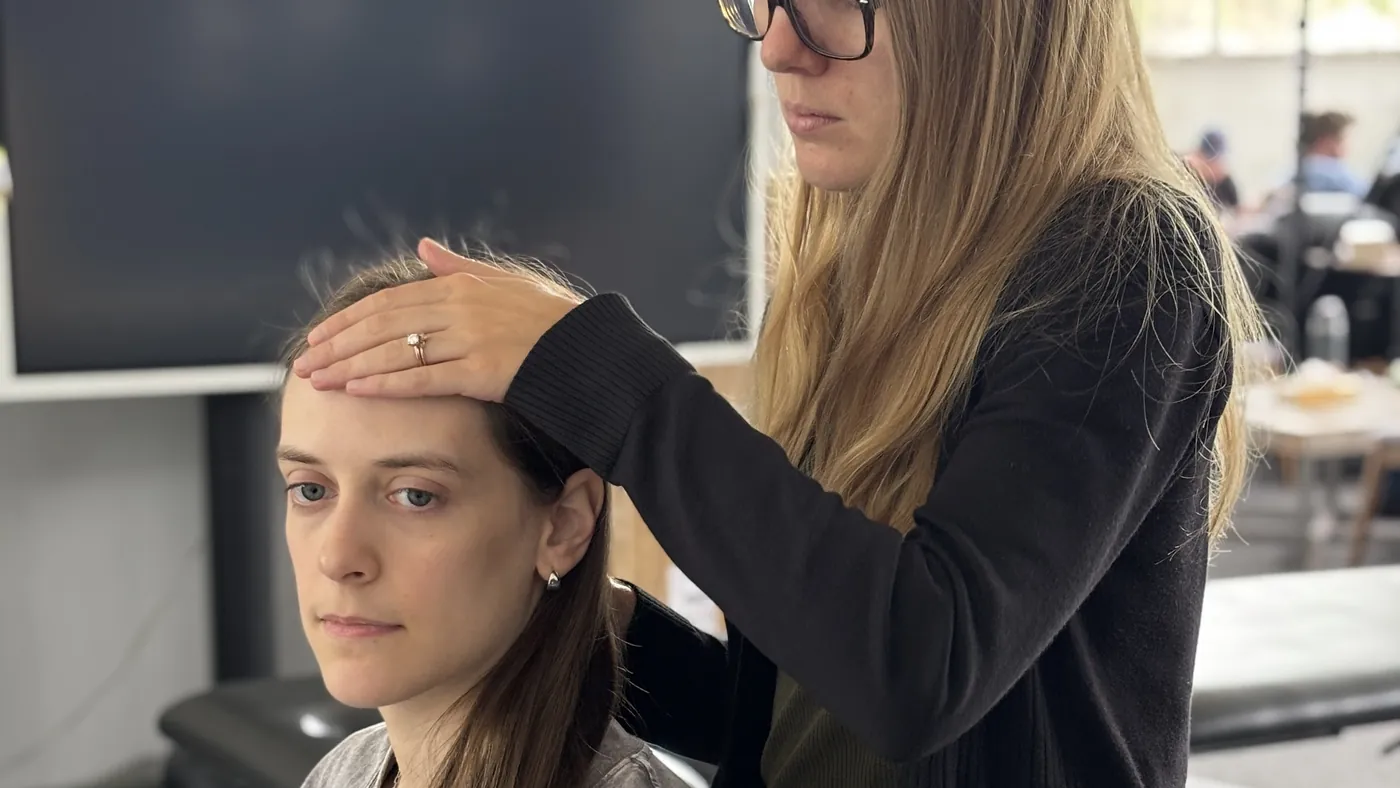
Eyes, Ears, and Neck: A Connected System
Your vestibular system (inner ears), your visual system, and the proprioceptors in your neck all work together to tell your brain where you are in space. When one of these systems isn't working well, the others compensate.
“Your neck is subservient reflexively to reflexes of the vestibular system... the muscles in your eyes are neurologically tied to the muscles in your neck, particularly your upper cervical spine.”
This means your neck stiffness might not be a neck problem at all. It might be a compensation for something else.
When Your Brain Locks Down Your Neck
If your vestibular system can't properly organize where your eyes should be in space, your brain has a backup plan: stiffen the neck.
“If I'm having problems in my vestibular system being able to organize where my eyes should be in space, what my brain will do is activate cervicocollic reflexes that tighten my neck down and make it more stiff.”
The stiff neck is your brain's way of stabilizing a system that's not coordinating properly. It's a compensation, and removing it without fixing the underlying problem could make things worse.
Why Adjusting a Stiff Neck Can Make Dysautonomia Worse
This is why cracking, adjusting, or aggressively loosening a stiff neck can sometimes backfire in dysautonomia patients.
“Maybe that adjustment is there because it needs to be there and we don't want to steal their compensation. We want to be able to fix the problem so they don't have to compensate anymore.”
The goal isn't to force the neck to loosen up. The goal is to figure out WHY the brain is locking it down, and address that.
What Happens When Eyes, Ears, and Neck Stop Coordinating?
When these systems become disconnected from each other, the brain can't accurately predict what's coming next. This produces dizziness, disorientation, and autonomic symptoms.
“The interaction between your inner ears and your eyes and your proprioceptive system become decoupled. So the normal waveforms that we experience with movement, they're not as accurate anymore. And that separation or the difference between them gives us the feeling that we're moving.”
Your brain expects certain sensory inputs to match. When they don't, it creates a sense of motion or instability that isn't there, and triggers autonomic responses to deal with a threat that doesn't exist.
Can Sensory Mismatch in the Neck Drive POTS Symptoms?
When this sensory mismatch ramps up brain activity, it doesn't stay contained. It spills over into the autonomic system.
“In some of those cases we'll see especially those ones that affect that brain stem component because we have that sense of motion, you're going to get a ramp up of activity in the autonomic system which may overfire or over mobilize energy in that system.”
So your POTS symptoms might be driven, at least in part, by a sensory coordination problem between your eyes, ears, and neck. Not a heart problem. Not an anxiety problem. A coordination problem.
How Is the Neck's Role in Dysautonomia Tested?
This isn't guesswork. These systems can be tested:
- VNG (eye movement testing): Shows if vestibular reflexes are working properly
- Balance testing: Reveals which sensory systems aren't integrating
“The Romberg test allows us to look at dynamically the integration between your vestibular system, your inner ear, your visual system and then your proprioceptive system throughout your body... someone that has all of those things integrating really well, people can typically stand eyes closed, move their heads in different positions and still maintain their balance.”
When specific sensory systems fail these tests, you know where the problem is, and where to direct treatment.
What to Know About the Neck's Role in POTS and Dysautonomia
- Neck stiffness in dysautonomia is often a compensation, and the root cause is elsewhere
- Eyes, ears, and neck are neurologically connected: dysfunction in one affects the others
- Don't remove the compensation before fixing the underlying problem
- Sensory mismatch can drive autonomic symptoms: it's a coordination error that's often mistaken for "anxiety"
- Testing exists to identify which systems aren't integrating properly
Frequently Asked Questions
Can neck problems cause POTS or dysautonomia symptoms?
Yes. The cervical spine plays a direct role in autonomic regulation. Your neck is neurologically tied to your vestibular system (inner ears) and your visual system. When sensory coordination between eyes, ears, and neck breaks down, the mismatch can spill over into the autonomic system, triggering POTS-like symptoms such as dizziness, heart rate changes, and disorientation.
Why does my neck get stiff with dysautonomia?
Neck stiffness in dysautonomia is often a compensation, not the root cause. If the vestibular system can't properly organize where your eyes should be in space, the brain activates cervicocollic reflexes that tighten the neck to stabilize the system. Aggressively loosening or adjusting the neck without fixing the underlying vestibular problem can make things worse.
How are the eyes, ears, and neck connected in the nervous system?
The vestibular system (inner ears), the visual system, and the proprioceptors in the neck all work together to tell the brain where the body is in space. The muscles in your eyes are neurologically tied to the muscles in your neck, particularly the upper cervical spine. When these systems become decoupled, the brain can't accurately predict motion, producing dizziness, disorientation, and autonomic symptoms.
Get Your POTS & Dysautonomia Roadmap
A free guide to understanding what's actually happening in your brain, and what to do about it.
Get the Free Roadmap