Your eyes are controlled by some of the most complex circuitry in your nervous system. Six muscles per eye, coordinated by multiple brain regions — the frontal lobes, cerebellum, brainstem, and vestibular nuclei all work together to produce smooth, accurate eye movements.
When any of these regions isn't functioning optimally, it shows up in how your eyes move. Often before you notice any other symptoms.
Why Eye Movements Matter for Neurological Assessment
More than 50% of the brain's neural pathways are involved in vision and eye movement control. This means that subtle dysfunction in almost any brain region will produce measurable changes in how the eyes track, fixate, and respond.
This isn't theoretical. Specific eye movement patterns map to specific brain regions with high reliability:
- Saccade accuracy (quick jumps between targets) reflects frontal lobe and cerebellar function
- Smooth pursuit (following a moving target) depends on parietal and frontal eye fields
- Gaze stability reflects vestibular and cerebellar integration
- Vergence (eyes moving inward/outward) involves brainstem coordination
- Nystagmus patterns (involuntary rhythmic eye movements) can localize lesions to specific vestibular or brainstem structures
A comprehensive oculomotor examination can tell us more about the functional state of your brain than most imaging studies — because it measures how the brain is actually performing, not just what it looks like structurally.
What We Test and Why
Saccadic Eye Movements
Saccades are the rapid, ballistic eye movements you make when you shift your gaze from one point to another. Your brain has to calculate the exact distance and direction, send the motor command, and then verify accuracy — all in a fraction of a second.
When we measure saccades with infrared tracking, we can detect:
- Hypometric saccades (undershooting the target) — often indicate cerebellar dysfunction
- Hypermetric saccades (overshooting) — can indicate specific cerebellar or brainstem involvement
- Increased latency (slow to initiate) — may reflect frontal lobe processing issues
- Direction-specific errors — can localize dysfunction to one hemisphere
Smooth Pursuit
When you follow a moving object with your eyes, your brain is continuously predicting the target's trajectory and adjusting eye velocity to match. This requires real-time coordination between visual processing, motor planning, and feedback systems.
Broken or "saccadic" pursuit — where the eyes fall behind and then catch up in small jumps — is one of the most common findings in patients with post-concussion syndrome, vestibular disorders, and cerebellar dysfunction. It's subtle enough that it often goes undetected without instrumented testing.
Optokinetic Nystagmus
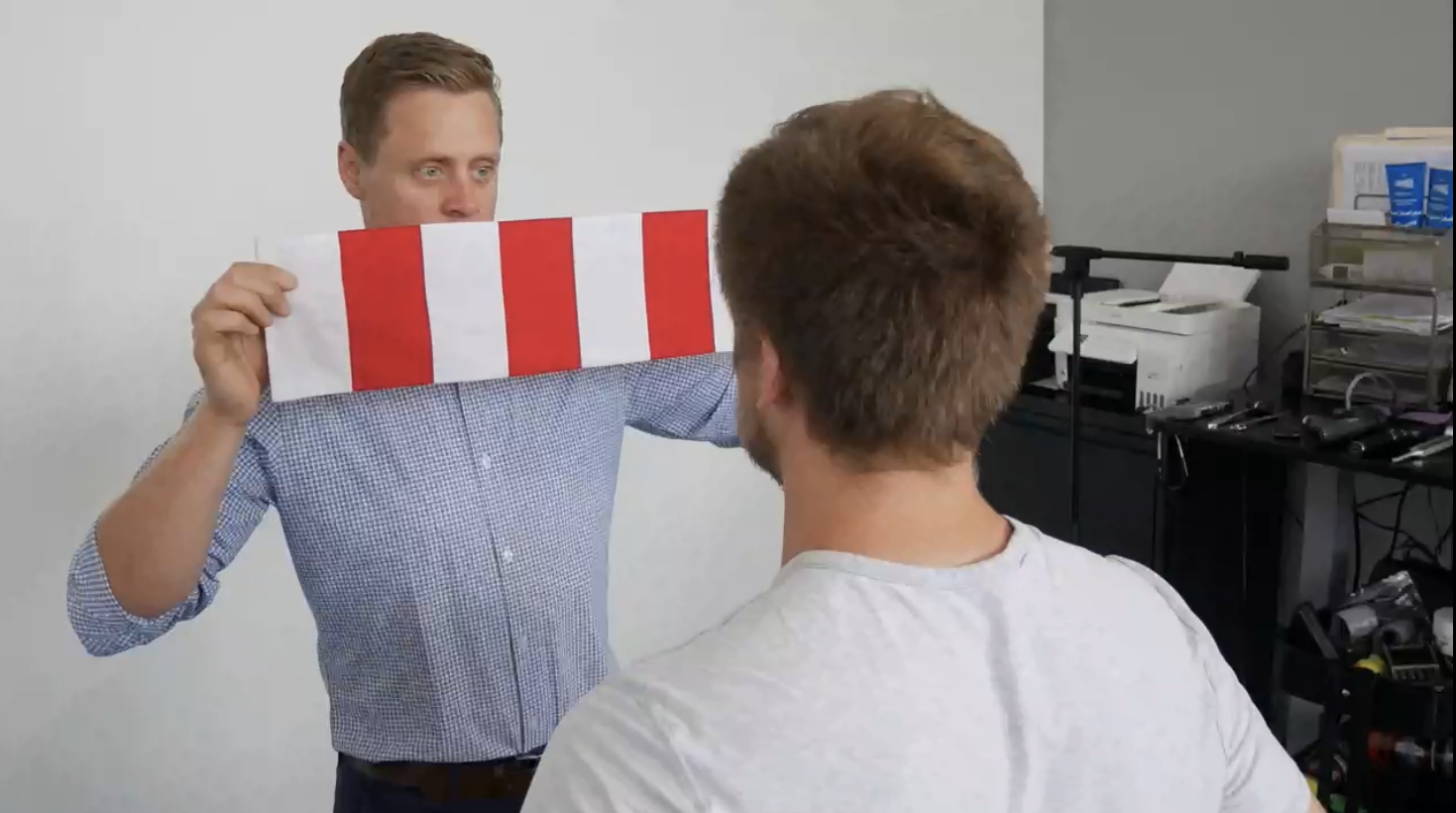
When you watch a repetitive moving pattern (like looking out a train window), your brain generates a specific reflex pattern of slow eye movements followed by quick resets. This optokinetic response tests the integration of visual motion processing with vestibular pathways.
Asymmetric optokinetic responses — where one direction is significantly different from the other — often reveal dysfunction in specific brainstem or cortical pathways that wouldn't be detected by standard neurological examination.
Gaze Stability (VOR Testing)
The vestibulo-ocular reflex (VOR) keeps your vision stable when your head moves. It's one of the fastest reflexes in the human body, operating at latencies of about 10 milliseconds. When it's impaired, the world appears to bounce or blur with head movement.
We test this by measuring eye movements during controlled head rotations, looking for gain asymmetries (one direction compensates better than the other) and phase shifts (timing mismatches between head and eye movement).
The key insight: most patients with dizziness, brain fog, difficulty concentrating, or persistent post-concussion symptoms have measurable oculomotor dysfunction that standard neurological exams miss. Infrared eye tracking gives us objective data on exactly which pathways are affected.
How Eye Movement Data Changes Treatment
The value of detailed oculomotor assessment isn't just diagnostic — it directly informs treatment. When we can identify which specific neural pathways are underperforming, we can design rehabilitation exercises that target those exact systems.
For example:
- A patient with hypometric saccades and poor smooth pursuit may benefit from cerebellar-targeted exercises involving timing, coordination, and predictive tracking
- A patient with asymmetric VOR gain needs vestibular rehabilitation focused on the underperforming side
- A patient with increased saccade latency may benefit from frontal lobe activation strategies
The brain is remarkably adaptable. Neuroplasticity allows these pathways to strengthen with targeted stimulation. But "targeted" is the key word — generic balance exercises or vision therapy won't address a specific cerebellar timing issue the way a targeted protocol will.
What Patients Often Notice
Many patients are surprised by what eye tracking reveals. Common reactions include:
- "I had no idea my eyes were doing that" — patients often can't feel the subtle abnormalities that show up clearly on infrared tracking
- "That explains why I can't read for more than 20 minutes" — oculomotor fatigue from inefficient pursuit or convergence directly impacts reading stamina
- "No one has ever tested this before" — comprehensive oculomotor assessment is rarely part of standard neurological workups
The eyes are a window into the brain — but only if you look carefully enough, with the right tools.
Experiencing Dizziness, Brain Fog, or Visual Symptoms?
Oculomotor assessment can reveal neurological dysfunction that standard testing misses. A free consultation call can help determine whether this approach fits your situation.
I'm Ready to Get Better