You hit your head. You were told to rest. You rested. And weeks, months, maybe years later, you're still not right.
Brain fog. Headaches. Sensitivity to light and noise. Difficulty concentrating. Dizziness when you turn your head. Fatigue that sleep doesn't fix.
If this sounds familiar, you're not alone. An estimated 15-30% of concussion patients develop persistent symptoms that last well beyond the expected 2-4 week recovery window. And the standard advice — rest, wait, avoid triggers — doesn't address the problem. It just avoids it.
Why Rest Fails as a Long-Term Strategy
In the acute phase after concussion, rest is appropriate. The brain needs time for the immediate metabolic crisis to resolve — the ionic imbalance, energy deficit, and inflammatory response that follow the injury.
But here's what most people aren't told: once that acute phase passes (typically 7-14 days), continued rest often makes things worse.
The reason is neuroplasticity. Your brain adapts to whatever demands you place on it. If you stop challenging the visual system, vestibular system, and cognitive processing centers, those systems don't heal — they deactivate. The brain essentially learns to avoid using the damaged circuits, and those circuits atrophy further.
This is why many post-concussion patients find that their symptoms don't improve with more rest. In fact, prolonged rest is associated with worse outcomes in multiple research studies.
The shift in concussion science: Current evidence strongly supports early, guided return to sub-symptom threshold activity. The brain needs appropriate challenge to heal — not absence of challenge. The key word is "appropriate." Too much makes symptoms worse. Too little prevents recovery.
What's Actually Broken After Concussion
A concussion doesn't damage one thing. It disrupts networks. The most commonly affected systems are:
Oculomotor System
Eye movement control is one of the most frequently disrupted functions after concussion. Saccadic accuracy, smooth pursuit, convergence, and gaze stability all depend on precise neural timing that concussion disrupts. This is why reading becomes difficult, screens feel overwhelming, and visually busy environments trigger symptoms.
Vestibular System
The vestibular system processes head position and movement, helping your brain understand where you are in space. After concussion, vestibular processing often becomes inaccurate or delayed, producing dizziness, imbalance, motion sensitivity, and the sensation that the world isn't quite stable.
Cervical Spine
The mechanism that causes a concussion — a sudden acceleration or deceleration of the head — also impacts the cervical spine. Cervicogenic dysfunction can produce headaches, dizziness, and cognitive symptoms that mimic post-concussion syndrome. It's frequently overlooked because imaging looks normal even when proprioceptive function is impaired.
Autonomic Regulation
Many post-concussion patients develop exercise intolerance, heart rate variability changes, and symptoms that look like POTS or dysautonomia. The brain's autonomic control centers can be directly affected by concussion, producing persistent dysregulation that rest alone won't resolve.
Cerebellar Timing
The cerebellum coordinates timing across virtually all brain functions — motor, cognitive, and emotional. Even mild cerebellar dysfunction after concussion can produce fatigue, slowed processing, coordination changes, and emotional lability that patients struggle to explain.
How We Assess Persistent Post-Concussion Syndrome
Instead of treating "post-concussion syndrome" as a single condition, we assess each of the potentially affected systems independently:
- Comprehensive oculomotor testing — infrared eye tracking to measure saccades, pursuit, convergence, and gaze stability with millisecond precision
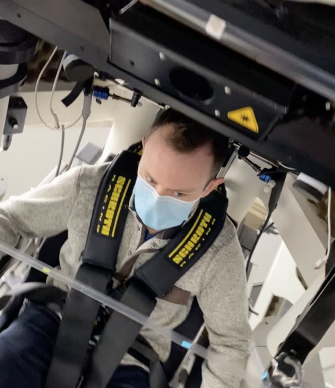
- Vestibular function assessment — videonystagmography (VNG), rotary chair, and computerized posturography to identify which vestibular components are affected
- Cervical proprioceptive testing — assessing the contribution of neck dysfunction to dizziness and headache symptoms
- Autonomic assessment — transcranial Doppler and heart rate variability analysis to evaluate autonomic regulation
- Cerebellar function testing — timing, coordination, and predictive motor tasks to assess cerebellar contribution
This produces a specific map of what's working and what isn't — not a generic "post-concussion syndrome" label.
Targeted Rehabilitation vs. Generic Treatment
Once we know which systems are affected and to what degree, treatment becomes targeted rather than generic. The difference matters enormously.
Generic post-concussion treatment might include "balance exercises" and "vision therapy." But if your balance problem is driven by a specific semicircular canal dysfunction, generic balance exercises won't address it effectively. If your visual symptoms are caused by saccadic dysmetria rather than convergence insufficiency, standard convergence exercises miss the mark.
Targeted rehabilitation means:
- Exercises are designed for your specific deficits, not a generalized concussion protocol
- Intensity is calibrated to be below your symptom threshold but above the level needed to drive neuroplastic change
- Multiple affected systems can be addressed simultaneously or sequentially based on priority
- Progress is measured objectively using the same tools that identified the deficits
What Recovery Looks Like
Recovery from persistent post-concussion syndrome isn't instantaneous. It requires consistent, targeted neurological rehabilitation — typically over weeks to months depending on severity and how long symptoms have been present.
But recovery is possible. The brain remains capable of significant neuroplastic change even years after the initial injury. We regularly see meaningful improvement in patients who have been symptomatic for years, because we're finally addressing the specific systems that weren't healing on their own.
The key is precision: identifying what's broken, targeting it specifically, and applying the right dose of stimulation to drive recovery without triggering symptom exacerbation.
Still Struggling After Concussion?
If rest and time haven't resolved your symptoms, the problem isn't that you need more time. It's that the specific neurological dysfunction hasn't been identified and targeted. A free consultation call can help determine next steps.
I'm Ready to Get Better