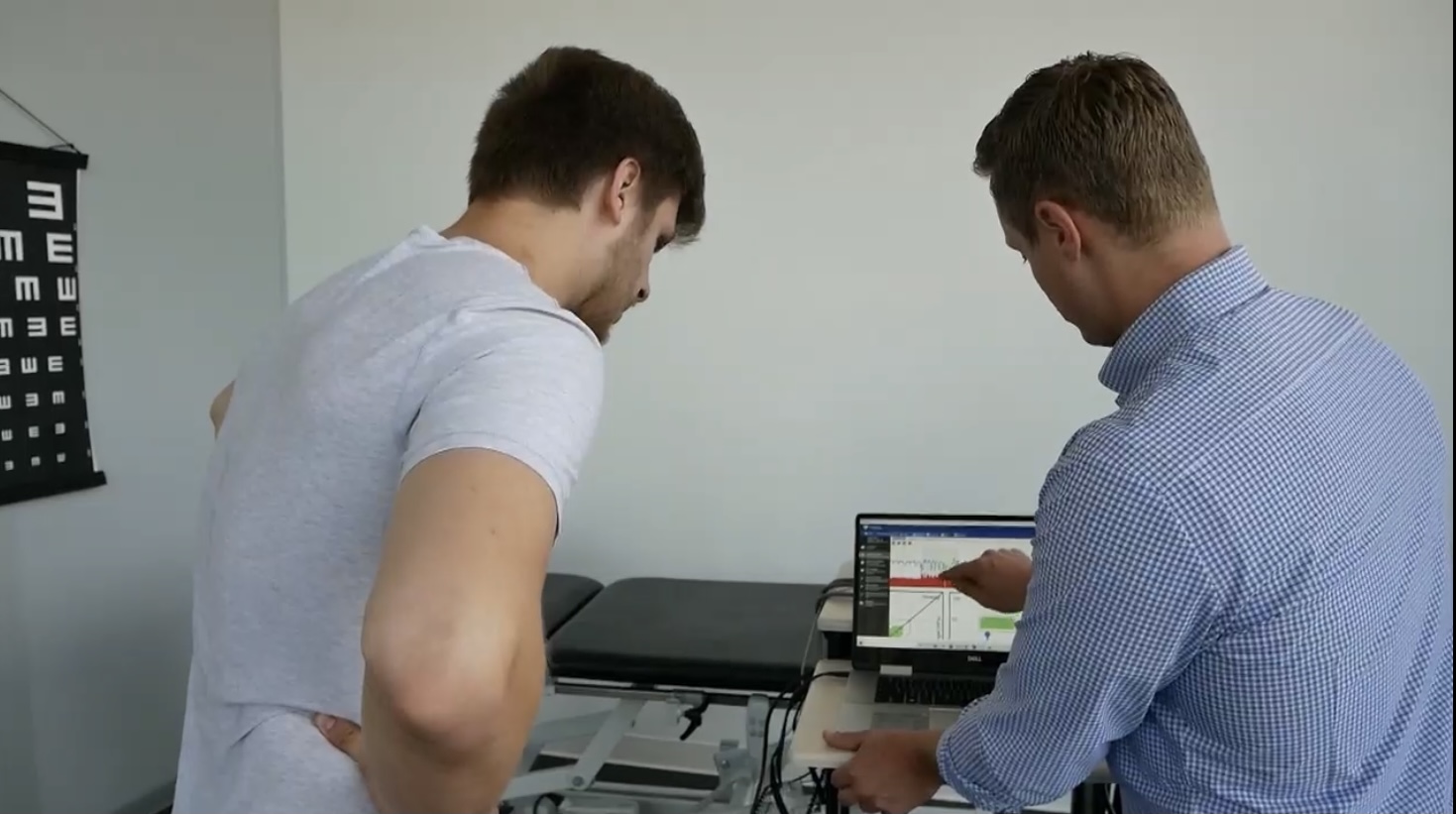
I have a case for you today that I think you're really going to like. It was originally diagnosed as POTS and treated as POTS after passing out — that actually upon further diagnosis, further look, that's not actually the problem we're trying to solve for. We're going to go through all the different details of what we see, how it happened, what we did for it, and then what the outcome was.
The Starting Point
This young man is 15 years old and got a rhinovirus, ends up passing out, but passes out, hits his head. From that event, we start to see this problem where he develops severe migraines. Migraines to the point where he's missing school — missed school for about 4 months in total. And then as they're starting to try to go back and grade back into that, he makes it just for a couple hours a day. Those of you guys that have had concussion-based symptoms will recognize that this is a pretty common feature.
He had the opportunity to go to get a really great workup from a clinic that specializes in treating POTS and other forms of dysautonomia. Had a great workup, but still just wasn't able to kind of make the grade on that. So that's where he comes into our world.
One thing that's also probably important in the story is that he also has a previous diagnosis of being on the autism spectrum. And that in the background of this helps us to try to understand a little bit more about why the brain is so important when we think about POTS as it's described here.
What He Was Dealing With
Our biggest complaint is a sensation of a migraine. And that migraine can feel like that pain kind of to the back of the eye on the one side, but then will also feel a heavy pressure in his head. He's also experiencing a lot of dizziness, lightheadedness, air hunger, difficulty breathing — that is really hard on him. And he's also having trouble with falling asleep, not feeling right, hard time with memory, really really tired and fatigued, just kind of a low energy sort of a state — confused, drowsy, having a hard time just kind of navigating through the world. Not doing great, feels like he's going to pass out all the time.
What the Exam Showed Us
So he's got some changes in the sensation in his body. When you use things like a pinwheel and you run it on the skin, we can see that in patchy areas around the body, he's having a hard time being able to detect what a sharp sensation should feel like. He's also noticing that when we use a vibration, just a simple tuning fork, and we put it on the bones and we check that side to side, we find that on the left side of the body he feels that a lot more intensely than on the right side, which is a really good clue for us.
We'll do a test — it's called a graphesthesia test where we will draw a letter on the bottom of your foot and we should be able to pick up what that letter is. For him, being able to do that on the right side was really hard for him. He couldn't figure out what the letter was. Did it fine on the left side. So again, same ideas — we've got this vibratory component, the left side of the body having some different sensation than the right, and that's translating into the graphesthesia as well.
We see there's some changes in coordination. We look at finger tapping and pronation-supination tests and we see that he's got kind of this bilateral — we call them hesitations in finger tapping — where it's not rhythmic, where we see like a stutter in the way they move. And then it's dysmetric bilaterally on both sides, especially when we do these kind of finger-to-finger tests where we're missing the targets operating back and forth between them.
As you might imagine, to the degree you might have some background in looking at autism spectrum disorder, sometimes one of the correlates to that is that we tend to see when kids are very young an overlap with hypotonia — where the muscles don't have the same tension, like their resting tension is a little bit lower, so they kind of look a little bit floppy, right? And we can feel that when we check reflexes because they won't be as strong and robust. That's a thing that we noticed here, which is really important.
The Eye Movements Tell a Big Story
When we look at the VOG testing, we put goggles over your eyes. They kind of look like VR goggles. And on the inside there are targets and we'll have people track them and we can see if your eyes are doing what they're supposed to do.
One of the things that was really interesting here — you can see looking at the file when he's looking straight ahead, he's able to do it. And then there's going to be this point where we take the target away and you just continue to look straight ahead. But what'll happen, you'll see his eyes are going to cross — and they cross aggressively, right? So his ability to kind of sense where he is changes and his eyes kind of slam together and this is kind of disorienting. It makes you feel like you're moving or you're not sure where you are. And this is happening to him also when he's got his eyes open.
The Tilt Test — What We Actually Measure
Instead of just looking at heart rate and blood pressure which we have on a constant monitor, we're also going to look at some functions of breathing where we look at the oxygen, the breathing rate, the respiration rate, and we look at a thing called end-tidal carbon dioxide which just helps us understand the ratio of how much CO2 is getting breathed out in the system. That helps us understand some of the acid-base relationships in the bloodstream which will affect the blood vessels in the brain.
We also look at the left and right cerebral blood flow. We're using ultrasound probes. They're measuring the middle cerebral artery and we're measuring the difference between when you're laying down versus when you're standing up. In the first minute, we're looking for it to maintain 90%, which is pretty cool. We want to be able to still get blood to your head when you're standing up.
In this case, he does okay. He's just a little bit under it in the first minute, but minute two, when you look at the right side, he really starts to go down to 48% on the right side in minute two, 44% minute 4, 64% minute 6. And then on the left side, again by minute four we're down at 57 and a half. By minute six, we're at 66 and a half-ish. So you can see we're starting to profoundly lose this blood flow in the brain and he feels this — he feels this as air hunger as he describes it. And then feels pulsing in his temples, pulsing in his feet.
At minute eight, this is where we have people do some what we call dual tasking — counting backwards by a certain number. And as you're thinking about that and doing that, what we want to see is an increase in the blood flow going to the brain. That makes sense, right? We need more blood to be able to do the good stuff.
On the left hand side, we get this nice response where it comes up 90% again. Awesome. But on the right side it actually drops again to 46% from 64. That's not entirely what we'd like to see. We'd like to see this symmetrical rise in the blood flow. So there's an asymmetry here left versus right. Both sides get affected, but the right side is affected more than the left, which is really important.
What We Did About It
So we know we've got these changes in blood supply to the brain. They're unilateral. They're affected by different motions. We can see that we've got changes in the outputs in terms of what's happening in his eyes, what's happening in the muscle tone in his body, what's happening with the way that he manages the movement within his body.
The things that we did were related to being able to give him some proprioception around his head and neck and where they are, some better proprioception into where his body is. Remember he was having that asymmetry between the two sides. We actually chose to give stimulus into that sensory system in a way that helps to kind of balance those two things out. So we're getting a bigger input from the side that he doesn't feel as well so we can get it to match back up to what he should be feeling. We also did some exercises with his eyes to help him to be able to find where he is in space.
We actually learned that he has a really hard time being able to navigate in the field of depth, which is not a big surprise after you watch his eyes move, right? So by incorporating all of those things in sequence, it gives his brain a better signal about what is going on in the body. Being able to process that faster, we can get more out of it — be able to do more work.
The Results
A few days later, first thing we see is that when he's turning his head, seated, no more cuts to the supply coming in. That's great. We need that just to be able to navigate the world, to be able to move your head. You can't be dropping supplies just from doing simple tasks like that.
We see on a tilt, the numbers are coming up very fast. He gets full normalized numbers on the left hand side. Really great. On the right hand side as a retest, the numbers are lower in these first four minutes, but they're way higher than they were. So we can see the progress of that system starting to move in a very short period of time — two weeks — which is pretty slick. We were super proud of him for that.
And then even better — in minute 8 where he's doing the dual tasking, rather than seeing it drop even further on that right side, both sides go up. We see 118% on the left and 110% on the right, which means that as he's upright and thinking, he's actually getting more blood flow into the brain than when he's laying down and resting, which is exactly what we want to see.
“If we can get blood flow into the brain on a consistent basis when he's up and moving around, then it makes it so that we can not only just scratch out a living, but he can actually start to heal and improve the functionality.”
If we look at those changes in the eyes — remember when he was looking in the dark, they would just kind of like a magnet close together. What you see on the second time around is he's actually able to in the dark hold those eyes steady looking forward without them coming together, which is a huge win. And he knows that because he's starting to feel like he can tell the difference in depths. It doesn't make him feel anxious. Migraines starting to go down, the heaviness in the head and chest, lightheadedness — all those things are improving by this point. And just super thrilled. Mom's super thrilled. And we were obviously thrilled as well.
Why the POTS Diagnosis Missed the Mark
Even though this was diagnosed as a primary POTS problem, previous work was meant to try to solve for this heart rate — that's not going to work. The heart rate is high because the cerebral perfusion is low. So if you're not getting blood flow to the brain, one of the only things that you can do is try to crank your heart a little bit more to make up for the shortfall into the brain.
And just like we talked about, he doesn't feel half of his body very well. So if we're trying to do these exercise-based protocols and we're ramping up that system, it overwhelms it. The same thing you see with the dual tasking — where trying to do that math drops the flow, right? It's too big of a load. When we try to do things that are exercise-based, when we don't feel the body, same thing. It's too big of a load and it's not going to work in this sort of case.
But what's interesting is that when you actually look at the second one, then we're going to see that that heart rate response can be even more normalized, which is pretty cool.
When he went home, things just keep improving, which is brilliant. He was able to take the things that we did in the clinic, translate them — just simple exercises. There's nothing too crazy, but it's more thinking about rather than thinking about what the exercise is, we want to think about what is that exercise doing in the brain and how is that improving these pathways that we're measuring. And he was able to take that home and do that as well, take that to school, kind of get back into running, swimming, all these sorts of things without triggering any flares, which is pretty cool.
Why This Matters
The reason I share this one is for those of you out there that are trying to get a grab on kind of what we're doing over here. What I'm really trying to point out is how important it is to not just think about these things in terms of what is my heart rate doing, right? We want to think about it in terms of what is the control system of my body and my brain doing — where is it failing in a way that the automatic stuff isn't doing what it's supposed to do, like we see in this case.
If we can do things that help to teach the brain again to kind of push it back in the right direction to learn how to do these processes again and be able to sustain it, we can see that just by focusing on the brain, we see all these positive downstream effects that happen. And I don't think that's something that is a common way to look at this. So we're trying to share it more and more so that people can see that it's not a one-off event. This is a thing that is happening with most people that are experiencing some sort of autonomic event.
May not be concussion, may not even be neurodivergence like in this case. Those are just the way that it presents here. Could be from an infection, could be from any other number of things that would affect the brain. But we want to shift people toward thinking about a brain-centric model for a starting place to understand these autonomic conditions.
Diagnosed With POTS but Not Getting Better?
If POTS treatment hasn't worked and nobody has looked at what the brain is actually doing, a free consultation call can help figure out whether our approach fits your situation.
I'm Ready to Get Better