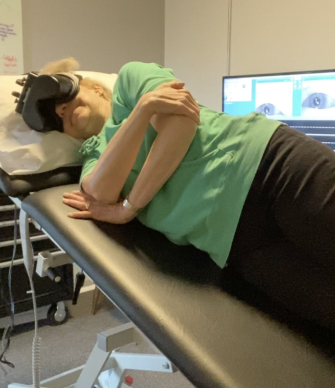
"You have a vestibular disorder" is a bit like being told "you have a car problem." It's technically accurate, but it doesn't tell you whether you need new brakes, a transmission rebuild, or a tire rotation. The treatment depends entirely on what's actually broken.
The vestibular system is one of the most complex sensory systems in your body. It involves peripheral organs in the inner ear, multiple brainstem nuclei, cerebellar processing centers, and cortical integration areas. Dysfunction at any of these levels produces dizziness — but the type of dizziness, its triggers, and the appropriate treatment are completely different depending on the source.
Understanding the Vestibular System
Before we discuss the types of dysfunction, it helps to understand what the vestibular system actually does. It serves three primary functions:
- Spatial orientation — telling your brain where your head is in space and how it's moving
- Gaze stabilization — keeping your vision clear during head movement (the vestibulo-ocular reflex)
- Postural control — maintaining balance by coordinating with visual and proprioceptive inputs
These functions involve a chain of structures from the inner ear through the brainstem to the cerebellum and cortex. A problem anywhere in this chain produces symptoms, but the type and pattern of symptoms differ.
The 5 Types
1. Peripheral Vestibular Dysfunction
This involves the vestibular organs in the inner ear — the semicircular canals and otolith organs. BPPV (benign paroxysmal positional vertigo), vestibular neuritis, labyrinthitis, and Meniere's disease all fall in this category.
Typical symptoms: Spinning vertigo, often triggered by specific head positions or movements. Nausea is common. Symptoms tend to be intense but episodic. Hearing changes may be present with some conditions.
Key diagnostic finding: Specific nystagmus patterns on VNG testing that correspond to the affected canal or organ. The direction, timing, and fatigability of the nystagmus tell us exactly which structure is involved.
Treatment approach: Canal repositioning maneuvers (for BPPV), vestibular habituation exercises, and peripheral vestibular rehabilitation. This is the best-understood type and often responds well to targeted treatment.
2. Central Vestibular Dysfunction
This involves the brainstem vestibular nuclei and their connections. The brainstem receives input from the peripheral vestibular organs and processes it — if this processing is disrupted, the brain receives inaccurate or poorly integrated vestibular information.
Typical symptoms: Persistent unsteadiness rather than spinning vertigo. The feeling that the ground is moving, difficulty walking in a straight line, visual motion sensitivity, and difficulty in crowded or visually complex environments.
Key diagnostic finding: Abnormal central oculomotor signs — gaze-evoked nystagmus, impaired smooth pursuit, abnormal optokinetic responses. VNG testing shows patterns that localize to brainstem rather than peripheral structures.
Treatment approach: Central vestibular rehabilitation targeting brainstem integration pathways. This often requires different exercises than peripheral rehabilitation and may need to address multiple brainstem pathways simultaneously.
3. Cerebellar Vestibular Dysfunction
The cerebellum calibrates and fine-tunes vestibular processing. It's responsible for making vestibular reflexes accurate, adapting them to changing conditions, and integrating vestibular information with other sensory inputs. When cerebellar processing of vestibular information is impaired, the system becomes imprecise.
Typical symptoms: Imprecise balance (stumbling, overshooting), difficulty with coordination during movement, gait unsteadiness that worsens with fatigue, and oscillopsia (visual bouncing during head movement). Symptoms are often worse with complex motor tasks.
Key diagnostic finding: Dysmetric saccades, impaired VOR cancellation, abnormal fixation suppression, and gait ataxia. Posturography shows specific patterns of sway inconsistent with peripheral or simple central vestibular loss.
Treatment approach: Cerebellar-targeted exercises emphasizing timing, precision, and adaptive calibration. This is distinct from standard vestibular rehabilitation and requires understanding of cerebellar motor learning principles.
4. Cervicogenic Vestibular Dysfunction
The cervical spine sends proprioceptive signals to the vestibular nuclei. These signals tell the brain about head-on-body position and are integrated with inner ear signals to create a complete picture of head movement. When cervical proprioception is disrupted — through injury, tension, or postural dysfunction — the vestibular system receives conflicting information.
Typical symptoms: Dizziness associated with neck movement or sustained neck positions. Headaches accompanying the dizziness. Symptoms often worse after prolonged computer work, driving, or sleeping in awkward positions. Often coexists with a history of whiplash or neck injury.
Key diagnostic finding: Cervical proprioceptive testing reveals impaired head repositioning accuracy, asymmetric cervical rotation effects on balance, and symptom reproduction with specific cervical positions. VNG testing may be normal or show subtle asymmetries.
Treatment approach: Cervical proprioceptive rehabilitation combined with vestibular integration exercises. Manual therapy directed at cervical spine function. This type is frequently missed because standard vestibular testing doesn't assess cervical contribution.
5. Functional Vestibular Dysfunction (PPPD)
Persistent Postural-Perceptual Dizziness is a condition where the brain becomes hypersensitive to vestibular and visual motion stimuli. It often develops after an initial vestibular event (a vestibular neuritis, concussion, or even a panic attack) and persists long after the original trigger has resolved. The peripheral and central vestibular structures may test normally, but the brain's processing of normal signals has become amplified.
Typical symptoms: Constant or near-constant dizziness (not spinning) that worsens with visual motion, complex visual environments (grocery stores, scrolling screens), and upright posture. Symptoms improve lying down. Often accompanied by anxiety, which can be a consequence rather than a cause.
Key diagnostic finding: Standard vestibular testing may be normal or show only mild findings. Posturography shows excessive visual dependence. The clinical pattern — constant symptoms, visual motion sensitivity, symptom duration exceeding the expected recovery from the original trigger — is the key diagnostic indicator.
Treatment approach: Gradual, systematic desensitization to visual motion and complex environments, combined with vestibular and proprioceptive recalibration. This type requires a different rehabilitation philosophy — building tolerance progressively rather than strengthening a weak system.
Why does this matter? Because treatment that works for Type 1 may be completely wrong for Type 3. Generic "vestibular rehabilitation" that isn't targeted to the correct dysfunction type is why many dizzy patients go through therapy without improvement. The assessment determines the treatment, and the treatment must match the dysfunction.
How We Determine Your Type
Identifying which type of vestibular dysfunction you have requires comprehensive testing:
- Videonystagmography (VNG) — tests peripheral vestibular function and central oculomotor pathways
- Rotary chair testing — assesses bilateral vestibular function and central vestibular processing
- Computerized dynamic posturography — identifies which sensory inputs (visual, vestibular, proprioceptive) you're relying on and which are unreliable
- Oculomotor assessment — differentiates peripheral from central from cerebellar dysfunction
- Cervical proprioceptive testing — evaluates the neck's contribution to vestibular symptoms
Many patients we see have been treated for the wrong type. They received generic vestibular exercises or were told to "wait it out" because standard testing was normal — when more comprehensive assessment would have identified the specific dysfunction and guided effective treatment.
Dealing with Persistent Dizziness?
If generic vestibular treatment hasn't worked, the issue may not be your commitment — it may be the wrong type being treated. A free consultation call can help determine whether comprehensive vestibular assessment is your next step.
I'm Ready to Get Better