POTS and Dysautonomia Articles

POTS names what your heart does when you stand. Our team looks for why it happens. Start with the racing heart itself, then the conditions it gets mistaken for, the symptoms that come with it, what helps and what recovery looks like.

Why Does My Heart Race When I Stand Up?

What is POTS, and why does my heart race?

What Causes the High Heart Rate in POTS?
POTS

What Causes the High Heart Rate in POTS?

What causes the high heart rate in POTS? The heart speeds up to rescue blood flow to your brain. Why it happens, what beta blockers reveal and what to measure.

The Three Types of POTS
POTS

The Three Types of POTS

POTS isn't one thing. Understanding the three subtypes, neuropathic, hyperadrenergic, and hypovolemic, is the first step toward treatment that works.

Hyperadrenergic POTS: Symptoms, Causes and Treatment
Dysautonomia

Hyperadrenergic POTS: Symptoms, Causes and Treatment

Hyperadrenergic POTS (hyperPOTS) is POTS with a norepinephrine surge on standing. See the symptoms, how it's tested, what beta blockers miss and what to check.

Orthostatic Intolerance: Symptoms, Types and What Causes It
Dysautonomia

Orthostatic Intolerance: Symptoms, Types and What Causes It

Orthostatic intolerance means symptoms when you stand that ease when you lie down. Symptoms, causes, and the types: orthostatic hypotension, POTS and OCHOS.

POTS Without the T: When You Have Every Symptom But Don't Qualify
Dysautonomia

POTS Without the T: When You Have Every Symptom But Don't Qualify

If your blood pressure looks normal and your heart rate doesn't quite qualify, you've been told nothing is wrong. Here's what the standard test misses.

The Autonomic System Isn't a Switch (And Why That Matters)
Dysautonomia

The Autonomic System Isn't a Switch (And Why That Matters)

The autonomic nervous system isn't an on/off switch. Learn why 'sympathetic dominance' is misleading and how specific pathways drive POTS symptoms.

Is it POTS, anxiety or something else?

POTS vs Anxiety: How to Tell Which Is Causing Your Symptoms
Dysautonomia

POTS vs Anxiety: How to Tell Which Is Causing Your Symptoms

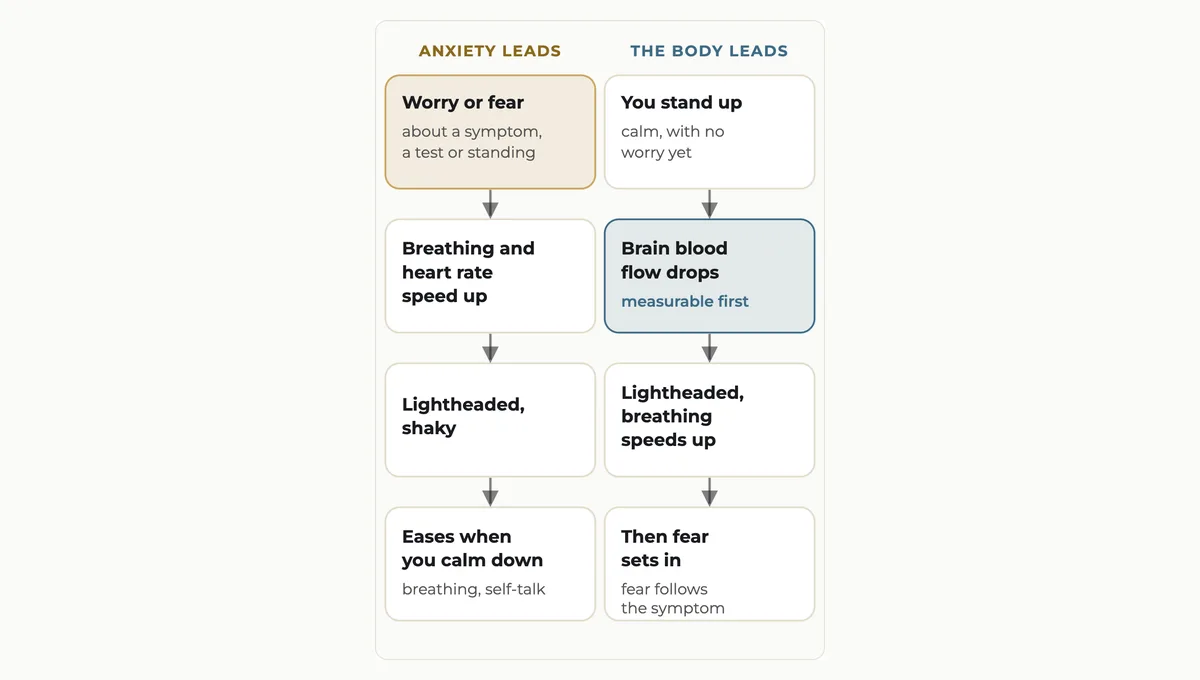
POTS or anxiety? How to tell which comes first, why POTS is so often misdiagnosed as anxiety, what testing shows, and a case where the body led.

FND and POTS: How They're Linked and How to Tell Them Apart
Neurology

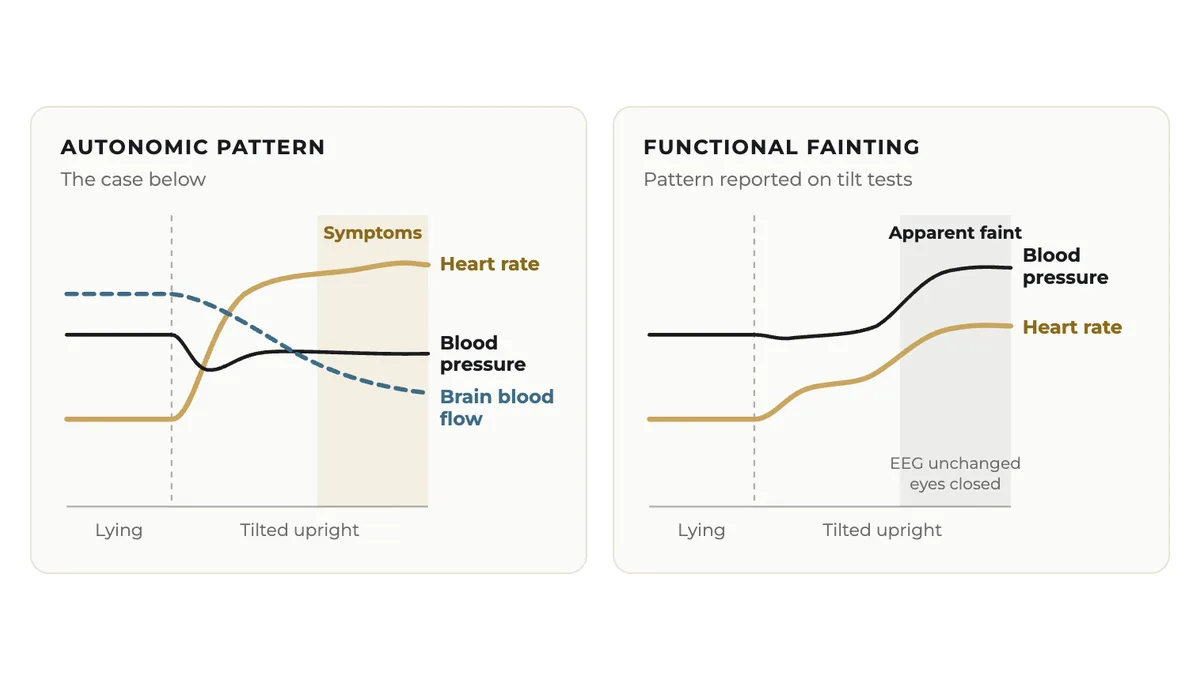
FND and POTS: How They're Linked and How to Tell Them Apart

FND and POTS can show up together. What FND is, how it differs from POTS, why standing can make FND symptoms worse, and what a tilt test can show.

What Doctors Are Missing in POTS Cases
Dysautonomia

What Doctors Are Missing in POTS Cases

Why so many POTS cases get dismissed, why clean labs don't mean you're fine, and how a brain-first approach finds what standard workups miss.

Why So Many Dysautonomia Patients Are Misdiagnosed and Mistreated
Dysautonomia

Why So Many Dysautonomia Patients Are Misdiagnosed and Mistreated

A POTS diagnosis can be a relief, but for many the treatments still don't work. Here's why, and what understanding your specific mechanism changes.

Small Fiber Neuropathy and POTS: How SFN Drives Dysautonomia
Dysautonomia

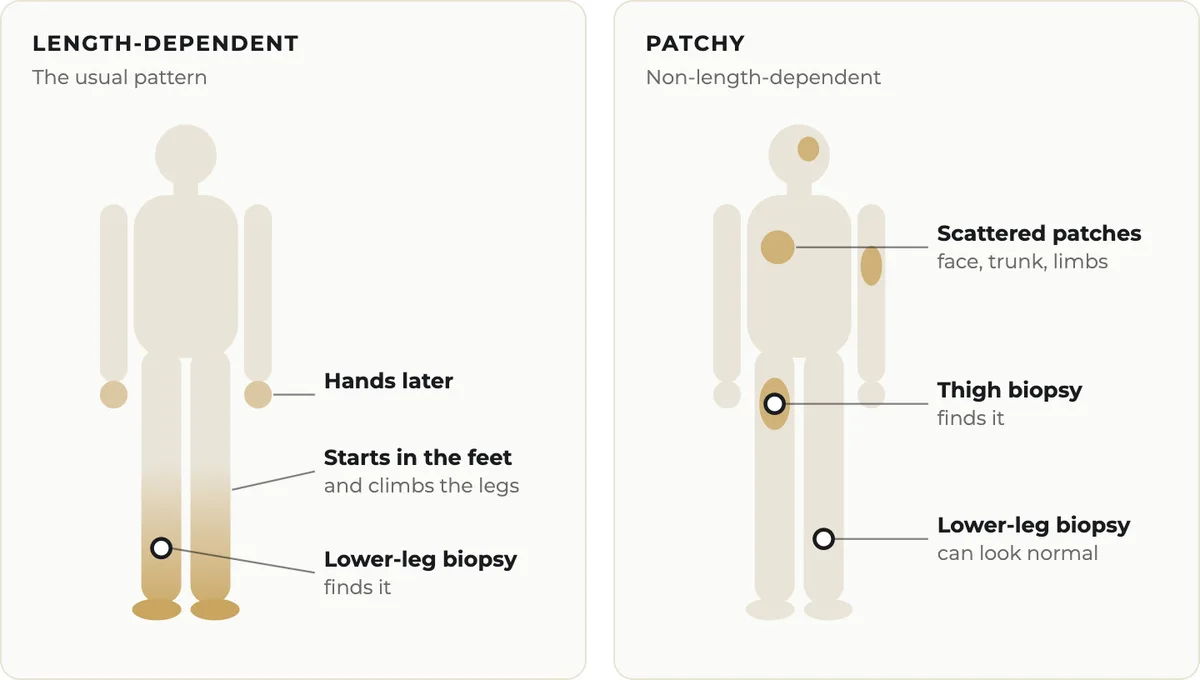
Small Fiber Neuropathy and POTS: How SFN Drives Dysautonomia

Small fiber neuropathy shows up in a quarter to half of POTS patients tested. How SFN drives dysautonomia, why a skin biopsy can miss it, and what improves it.

MCAS and Dysautonomia: How Mast Cells and POTS Connect
Dysautonomia

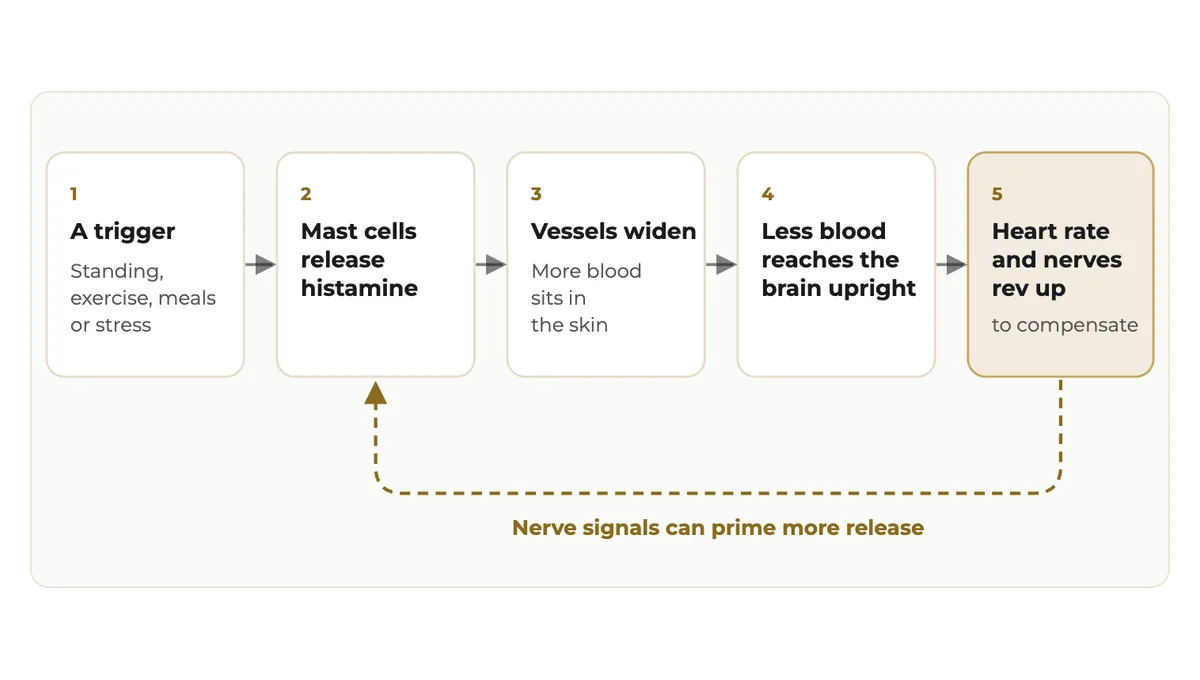
MCAS and Dysautonomia: How Mast Cells and POTS Connect

How MCAS and dysautonomia connect: what histamine does to blood flow and heart rate in POTS, how to tell the 2 apart, and what helps when both flare.

Can Vitamin Toxicity Be Causing Your POTS?
Dysautonomia

Can Vitamin Toxicity Be Causing Your POTS?

Can B6 toxicity cause POTS? Learn about vitamin B6 and autonomic nerves, how to start moving again with POTS, and hypoplastic vertebral arteries.

POTS vs Deconditioning: Can Deconditioning Cause POTS?
Dysautonomia

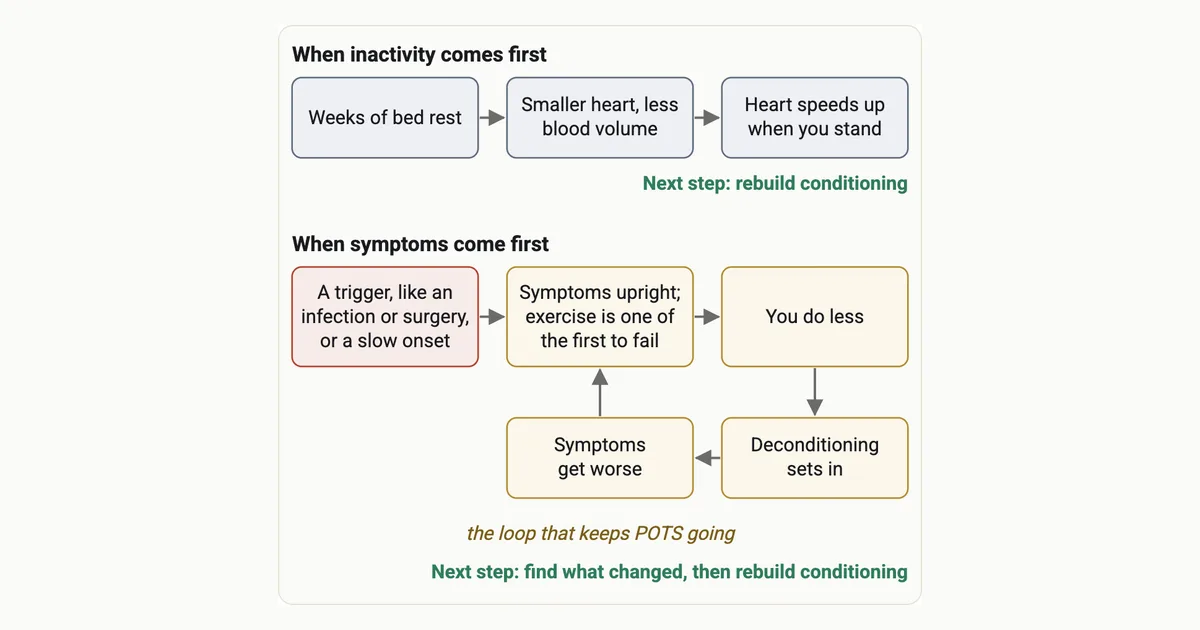
POTS vs Deconditioning: Can Deconditioning Cause POTS?

Does deconditioning cause POTS, or POTS cause deconditioning? What bed rest does to the heart, POTS vs being out of shape, and what exercise can and can't do.

Why do I have symptoms beyond a fast heart rate?

Blood Pooling in Your Legs, Hands and Feet: What Causes It
Dysautonomia

Blood Pooling in Your Legs, Hands and Feet: What Causes It

Blood pooling is blood collecting in your legs, feet or hands when you're upright. What it looks like, when it's normal, and what causes it in POTS.

POTS Fluid Dumping: Why Salt and Water Aren't Enough
POTS

POTS Fluid Dumping: Why Salt and Water Aren't Enough

For most people with POTS, low blood volume is not the core problem. Here is why salt and water hit a ceiling, and what fluid dumping really means.

Why POTS Wrecks Your Digestion (And Why GI Doctors Can't Find the Problem)
POTS

Why POTS Wrecks Your Digestion (And Why GI Doctors Can't Find the Problem)

Why POTS and dysautonomia cause nausea, bloating, and gastroparesis. The gut isn't broken; the brain's control of it is. The autonomic-GI connection.

Brain Fog Causes: Why It Gets Worse When You Stand or Drive
Neurology

Brain Fog Causes: Why It Gets Worse When You Stand or Drive

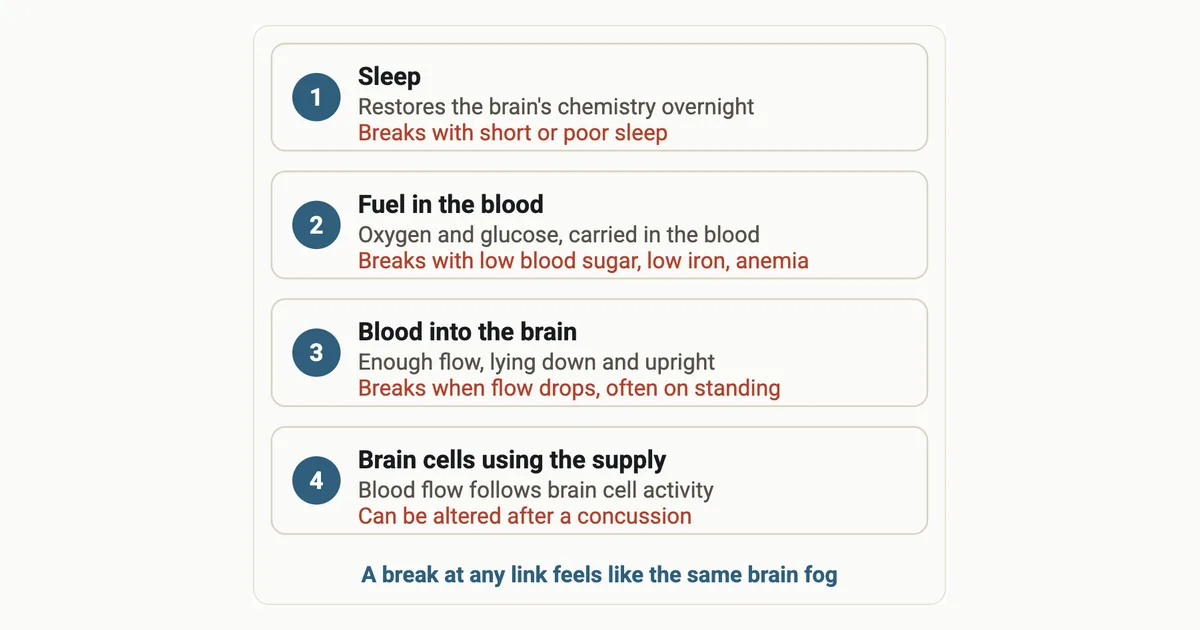
What causes brain fog, why it can get worse when you stand or drive, and how to find which link in your brain's supply chain is weak.

Ear Fullness and Popping in POTS: The Drainage Problem Behind It
Dysautonomia

Ear Fullness and Popping in POTS: The Drainage Problem Behind It

Ear fullness, popping, or a heartbeat in your ear with POTS? It often traces to how blood drains from your head, not just your eustachian tubes.

Derealization and POTS: Why You Feel Detached From Reality
Dysautonomia

Derealization and POTS: Why You Feel Detached From Reality

Feeling detached from reality with POTS or dysautonomia? Derealization is often a blood-flow and vestibular signal, not just anxiety. What it means.

POTS Exercise Intolerance: Symptoms, Causes and What Helps
Dysautonomia

POTS Exercise Intolerance: Symptoms, Causes and What Helps

Why exercise feels so hard with POTS: the symptoms, what research shows about the heart and fitness, what our team finds in the brain, and what helps.

What helps, and where do the usual treatments stop?

POTS Hydration: How Much Salt and Water Actually Helps
POTS

POTS Hydration: How Much Salt and Water Actually Helps

How much salt and water actually helps POTS, where the 2 to 3 liter advice stops working, and the signs your real problem is blood distribution.

POTS Treatment Without Medication: Why Drugs Suppress the Compensation Your Brain Needs
POTS

POTS Treatment Without Medication: Why Drugs Suppress the Compensation Your Brain Needs

POTS medications manage the compensation. Neurological rehab targets the regulation failure. Understand where each approach works and where it falls short.

SSRIs and POTS: Do They Help or Make It Worse?
Dysautonomia

SSRIs and POTS: Do They Help or Make It Worse?

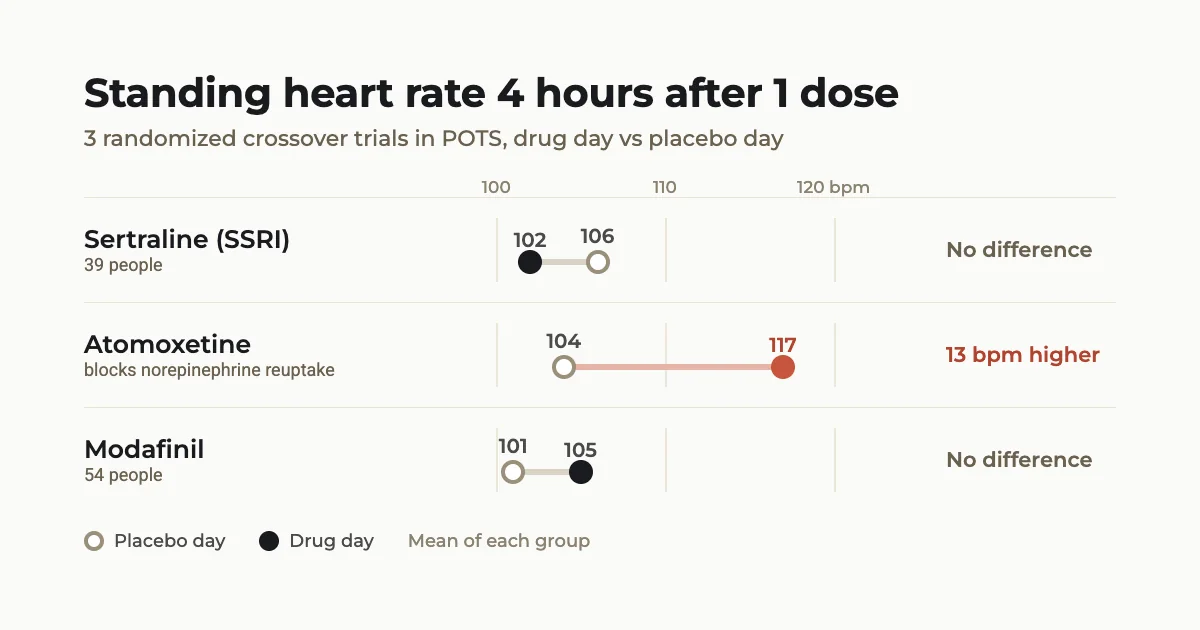
Do SSRIs help POTS? What the one randomized SSRI trial found, why SNRIs and ADHD drugs can raise standing heart rate, and how to talk with your prescriber.

Is IV Saline the Cure for ME/CFS and Dysautonomia?
Dysautonomia

Is IV Saline the Cure for ME/CFS and Dysautonomia?

IV saline helps ME/CFS and dysautonomia patients feel better temporarily. But if the problem is blood flow distribution, saline is a patch, not a fix.

Why Standard Exercise Advice Fails POTS Patients
Dysautonomia

Why Standard Exercise Advice Fails POTS Patients

Exercise advice fails POTS patients because it ignores orthostatic blood flow. Deconditioning isn't the cause. Fix cerebral perfusion first.

Why Most Dysautonomia Treatments Don't Work
Dysautonomia

Why Most Dysautonomia Treatments Don't Work

Why do so many dysautonomia treatments fail? Both conventional and functional medicine miss the one core problem: the brain is the common thread.

The Vagus Nerve Isn’t What You Think
Neurology

The Vagus Nerve Isn’t What You Think

Vagus nerve stimulation for POTS misses the point. The vagus is mostly sensory, paired antagonism is a myth, and the real driver of dysautonomia differs.

Recalibrate, Don't Just Manage
Dysautonomia

Recalibrate, Don't Just Manage

POTS and dysautonomia treatment should recalibrate your nervous system, not just manage symptoms. Targeting the lynchpin unlocks recovery.

How Functional Neurology Fits POTS Care
POTS

How Functional Neurology Fits POTS Care

POTS is a brain regulation problem, not a heart rate problem. Mechanism-based neurological evaluation identifies what's actually driving symptoms.

Peripheral Nerve Stimulation for Dysautonomia: Train the Brain Without Crashing
Dysautonomia

Peripheral Nerve Stimulation for Dysautonomia: Train the Brain Without Crashing

Peripheral nerve stimulation lets dysautonomia patients train the brain without crashing. How PNS restores proprioception and cerebral blood flow.

Sleep, Neuroplasticity, and POTS: Why Your Brain Needs Sleep to Heal
Dysautonomia

Sleep, Neuroplasticity, and POTS: Why Your Brain Needs Sleep to Heal

Sleep is actively restorative. Learn why sleep is the engine of neuroplasticity and recovery in dysautonomia and POTS.

Intensive POTS Treatment Programs
POTS

Intensive POTS Treatment Programs

What intensive POTS treatment involves: cerebral blood flow testing, vestibular rehab, and neurological rehabilitation. What to expect in 4 to 7 days.

Can POTS get better?

Can POTS Be Cured? What the Research and Our Clinical Experience Actually Show
POTS

Can POTS Be Cured? What the Research and Our Clinical Experience Actually Show

Can POTS be cured? Many recover significantly or fully. 'Cure' means recalibrating a nervous system that lost its precision, and research shows it can.

How to Know If Your POTS Is Actually Improving
Dysautonomia

How to Know If Your POTS Is Actually Improving

How to know if your POTS is actually improving using cerebral blood flow data, not just symptoms. A case study shows why BP meds may worsen perfusion.

POTS Recovery After 2 Weeks of Treatment
Case Study

POTS Recovery After 2 Weeks of Treatment

A 27-year-old with brain fog and POTS after a concussion recovered cerebral blood flow and resolved heart rate instability in two weeks.

Case Study: 2 Years of POTS Resolved in One Month
Case Study

Case Study: 2 Years of POTS Resolved in One Month

A patient with two years of POTS recovered in one month through targeted neural rehab: cerebral blood flow testing, tilt progression, and retinal slip.

Are People With POTS Permanently in a Wheelchair? An 8-Year Case
Case Study

Are People With POTS Permanently in a Wheelchair? An 8-Year Case

No study we found counts how many people with POTS stay in a wheelchair. See one 8-year case: what our team found, what we did and what changed.

EDS and POTS: Back to Life in Less Than a Month
Case Study

EDS and POTS: Back to Life in Less Than a Month

Case study: A college-aged EDS and POTS patient went from missing school and extreme fatigue to getting back to life in under a month.

POTS Treatment Case Study: From Housebound to Coaching Again
Case Study

POTS Treatment Case Study: From Housebound to Coaching Again

POTS case study: A 21-year-old athlete went from housebound to coaching baseball and taking classes again. Neuropathy findings and CO2-guided rehab.

Case Study: POTS and Digestion Problems Solved Together
Case Study

Case Study: POTS and Digestion Problems Solved Together

A 21-year-old with POTS and gastroparesis improved digestion, heart rate, and sensation through neural rehab, without any GI-specific treatment.

Diagnosed With POTS, But That Wasn't the Problem
Case Study

Diagnosed With POTS, But That Wasn't the Problem

A 15-year-old diagnosed with POTS wasn't actually a POTS case. See the real diagnosis, brain-based treatment, and full recovery including return to school.

For how our team evaluates and treats POTS, see the POTS page. Other forms of dysautonomia are on the dysautonomia page.

Get Your POTS & Dysautonomia Roadmap

A free guide to understanding what's actually happening in your brain, and what to do about it.

Get the Free Roadmap