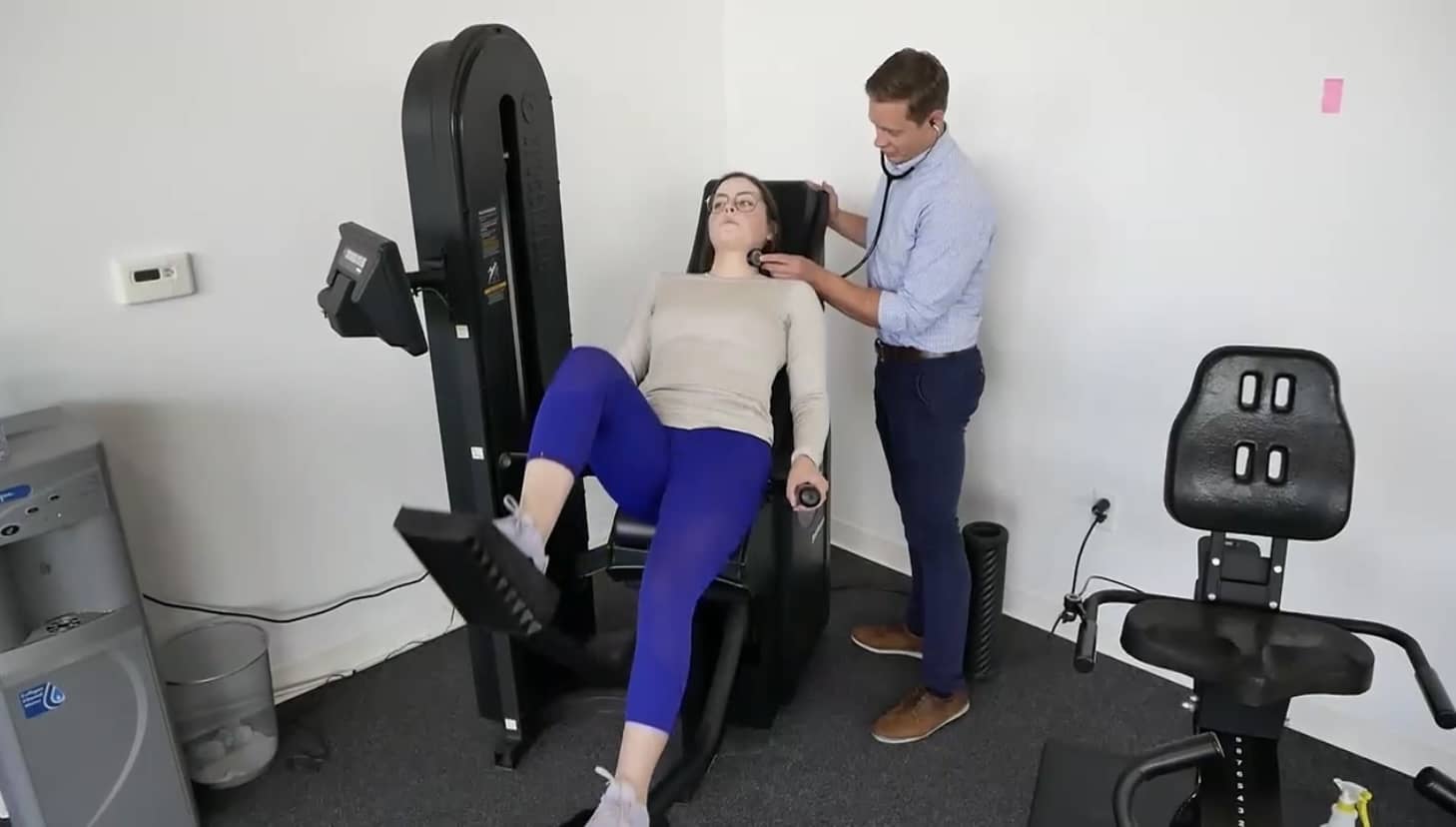
“Just exercise more.” If you have POTS, you’ve probably heard this. Maybe from a cardiologist, a physical therapist, or a well-meaning friend. And you’ve probably noticed that it doesn’t work the way they say it should.
Here’s why.
The Orthostatic Problem Nobody Mentions
Most exercise programs are designed for upright activity. Running, walking, standing weight circuits. But POTS is, by definition, an orthostatic condition — it gets worse when you’re upright.
“If you’re having POTS being upright exercising is also maybe overlooking a key factor in the fact that it’s orthostatic in the first place.”
Telling someone with an orthostatic disorder to do more upright exercise is like telling someone with a broken leg to walk it off. The position itself is part of the challenge. This is a fundamental reason why exercise intolerance in POTS is so misunderstood.
It’s Not About Being Out Of Shape
The narrative around POTS and exercise often comes back to deconditioning. But for many patients, the problem isn’t fitness — it’s fuel delivery.
“Her primary complaint was fatigue and exercise intolerance. So, she would get out of breath and really tired doing things that previously she didn’t have any problem with. So, for example, she used to be able to walk her kids to the pool without an issue, and now she was getting out of breath, just walking them to the bus stop... she used to be able to do an exercise class for 45 minutes, no problem. And then as her symptoms started getting worse, she’d struggle to do half an hour. And then afterwards she’d have to rest for a couple hours just to feel like she could do something else after that.”
This isn’t deconditioning. This is a system that can’t deliver what the brain and body need to function.
Blood Flow First, Then Capacity
The approach that actually works is addressing cerebral blood flow before pushing exercise capacity.
“I look at trying to solve for the cerebral perfusion as a starting place because it means that you can push them more. So, if we can get them to where we have a higher capacity level to start with because they’re actually getting irrigated, you’re getting blood flow, then it gives us more space to actually push people rather than just taking these little micro increments and hoping that we don’t push it too far.”
When the brain is getting adequate blood flow, the system can handle more. Without that foundation, pushing harder just causes crashes.
The Dosing Problem
Even when someone with POTS can exercise, the dose matters enormously. This isn’t about going hard. It’s about going precisely right.
“You can only push something just beyond what it’s currently capable of in order to make it grow. You can’t push it super hard or you’ll actually injure the tissue. And you can’t push it not enough because it doesn’t create a change. It doesn’t give a challenge or a response, a challenge that creates a big enough response in the system. So what you’re aiming for is you want to challenge the system but just a little bit so that it can recuperate and recover and get a little stronger.”
Too much causes post-exertional malaise. Too little creates no adaptation. The window is narrow, and it’s different for every patient.
What Recovery Actually Looks Like
When blood flow is addressed first and exercise is dosed properly, real recovery happens:
“She decided that she was going to do a whole workout class at the end of the day and felt wonderful, didn’t have to rest for hours afterwards and was able to wash her hair, which she was super excited about.”
From struggling with a 30-minute class to completing a full workout without crash. That’s not deconditioning recovery. That’s a system that’s actually working again.
Key Takeaways
- Standard exercise programs ignore the orthostatic component of POTS — upright exercise can make things worse
- Exercise intolerance does not equal deconditioning — it’s often a fuel delivery problem
- Address blood flow first — cerebral perfusion creates the foundation for building capacity
- Dosing matters enormously — too much causes crashes, too little creates no change
- Real recovery means exercising without post-exertional malaise
Every Workout Ends in a Crash?
If exercise advice keeps failing you and every workout leaves you wrecked, a free consultation call can help determine whether blood flow is the missing piece in your recovery.
I'm Ready to Get Better