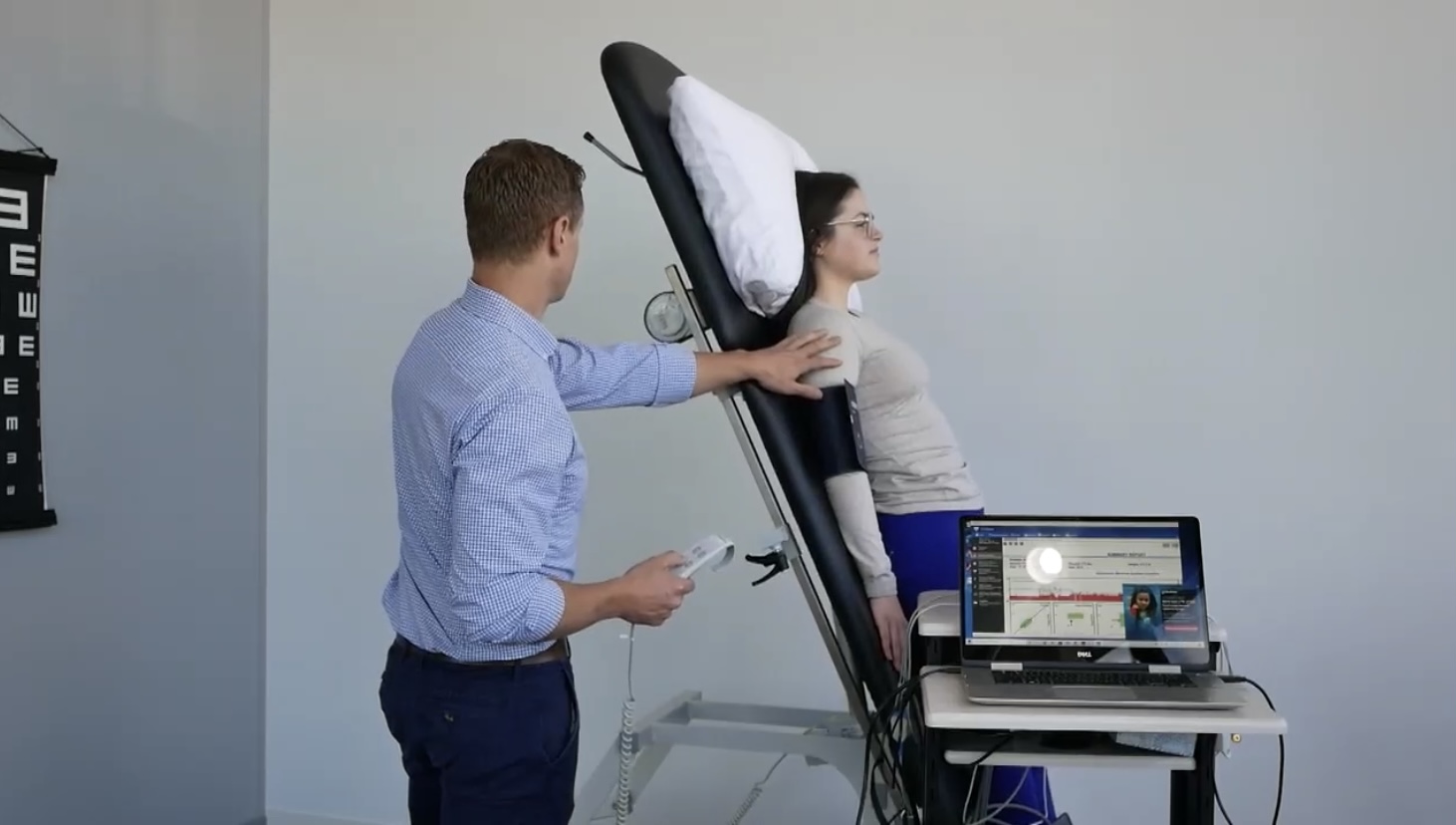
Earlier this week, we had the opportunity to do a test-retest sort of scenario for someone. And I think that's going to be really useful for people because most of the people that are listening to something like this are aware — in the course of being prescribed a medication, it's kind of like sometimes they work, sometimes they don't. That's the experience that a lot of people have, and there's a trade-off. So anytime that we use something exogenous or external, we have to trade off between like, well, what is it going to give me and what is the thing it's going to take? Because obviously, if it was just the way my body ran, I wouldn't need it.
The Starting Point: High Blood Pressure and POTS Symptoms
So we have someone at 29. They had previously been diagnosed with hypertension or high blood pressure, and thought — like we all, everybody hears — you hear high blood pressure, you think we got to get that down. Sometimes we don't pay attention to why we got to get it down, but normally it's because somebody's at a risk of stroke. And to fight off the risk of stroke, a lot of times it seems worthwhile for people to bring that blood pressure down. But what we're not taking into account is that in any young person, why is the blood pressure high to begin with? That's a useful question.
So in this particular case, that happened to be part of the history for someone who was having symptoms of POTS. And with those POTS symptoms, I'm feeling a lot of things that are very much in the hypoperfusion range, right? So, brain fog, lightheaded, all of these things, dizziness, nausea, etc. All the stuff that makes you feel like you're bogged way down.
What the First Tilt Test Showed Us
So what we did was had a quick look at what's going on from just like an orthostatic perspective. Basically, I break it down like this to explain to people because it's kind of an easy way to visualize it. The non-shaded part is someone laying down. And then in the gray area, that's kind of like when we're tilted. And then the bottom part of white is where we're laying back down again. So a standard tilt table test — 70-degree tilt, 10 minutes.
Sure enough we see this baseline heart rate around 72 and then immediately in that first minute we're popping up to 102 and then it kind of settles back in the 80s and then into the 90s. So the deltas are, you know, 41% in the beginning and then in the kind of the 20-ish percent range thereafter.
Then we look at the blood pressure. Blood pressure is high. So, you know, like 148 over 90 and then when we're on a tilt, 151 over 83, 147 over 98. It kind of stays in that 140s over upper 80s, 90s range.
“We're in this little bit of a pickle where our blood pressures are up, but the blood pressure in the brain — the cerebral perfusion pressure — is low. So that doesn't seem right.”
The Cerebral Perfusion Problem
So we slide over and we realize that the perfusion rate when we're laying down, left side's about 62. This is using the transcranial Doppler, by the way. So we're measuring middle cerebral artery blood flow using the middle cerebral velocity. Centimeters per second is our metric. So we're starting at 62 and 60 as a baseline. And then when we tilt people up, we want it to basically stay there, right? And we know how efficient that hemodynamic system is based on how close it can get to that baseline number.
And you can see the numbers that are highlighted — they're kind of below where we want them to be based on normals. So you can see that we're in this little bit of a pickle where our blood pressures are up, but the blood pressure in the brain or the cerebral perfusion pressure is low — a condition known as cerebral hypoperfusion. So that doesn't seem right. And then we're getting the subjective symptoms — dizziness, shortness of breath, doesn't feel right, lightheaded.
OK so if we just stop for a second and go, what in the heck is going on here? You realize that we're not getting a normal transfer of this high blood pressure from the body being transferred into the brain, which means that we're somehow restricting the flow as it comes through the carotid and actually into the skull. That's super important, right?
The Medication Question
This person was on a beta blocker — metoprolol. It's been about 24 hours since the last dose. So for those of you that know, you know, but if you don't, metoprolol is a medication that is used as a beta blocker. It's a beta-1 adrenergic receptor blocker, which just means it only affects a certain type of the adrenergic receptors. What we're saying is normally taking that metoprolol as a way to decrease this blood pressure, right? And without it, we can see it kind of drifting back up into these higher numbers. Mean arterial pressure is kind of over 100, and it's like it's creeping up.
And then the question kind of becomes why, right? So we had this conversation. We talked about those things that we want to pay attention to. And then we said, you know, what we might want to take a look at though is what changes when you use the metoprolol — because the thought would be that it should decrease the blood pressure. But when I look at that, I say, hm, if we're already having a hard time converting a high blood pressure into normal blood flow velocity in the brain, what's going to happen when we go back on the medication and then we drop that blood pressure? Because now it's even harder to get blood flow into the brain.
“If we're already having a hard time converting a high blood pressure into normal blood flow velocity in the brain, what's going to happen when we go back on the medication and then we drop that blood pressure? Because now it's even harder to get blood flow into the brain.”
The Retest: 23 Days Later, Back on Medication
So what we did was we went back on the medication. And then with the medication, we want to see — does it make it better? What happens with the blood pressure? What happens to perfusion pressure? So this is the same test, 23 days later. We're back on metoprolol. Last dose was 90 minutes ago. This is a morning test. Same time for both of these.
And here's the part that I think is super useful. When we look at this, we see that this blood pressure is coming down. So we're not crazy low, but we're lower. If we look at the mean arterial pressures here, our baseline is about 10 points lower than when we started out last time. So it does have the effect of bringing the blood pressure down. That was kind of the intended purpose.
But if we look over here, what becomes really interesting — from just an observation, but I think the observation is worth the exercise. We observed that it was much harder to actually acquire the read this time. So to actually find the insonation of the vessel. That's number one. Number two was our ability to be able to get that was much lower. So our baseline number was a lot lower.
But when we compare the vessel to itself, which is what we're doing, we see a more significant drop of the cerebral perfusion pressure. The numbers go down even more, especially as time goes on. So they start low, they come up for a couple minutes, and then they start dropping pretty precipitously in the eighth and 10th minutes. And then we actually were unable to hold the value as we started getting into the teens. So the numbers were getting low enough to where they weren't picking up on the machine, and then in those last two minutes they started dropping pretty hard.
Why the Blood Pressure Might Be High for a Reason
So what I think is a good takeaway from this is we're not saying like take meds, don't take meds. That's not really the moral of the story. That's not my role in the world. But what is useful is considering how these dynamics work. And if you kind of think about them logically, it makes a lot of sense.
So metoprolol tends to do a couple things. Number one, it's meant to kind of block the sympathetic nerve signal. It blocks them at the SA node which is what controls our heart rate. Blocks it at the AV node. So we kind of suppress it. So that's going to bring the heart rate down. That's kind of the job. And then as a consequence we get lower blood pressure.
It also affects what's called inotropy, which is basically the contractility of the heart — like how hard the heart can contract. It kind of slows that down. So it actually doesn't contract as hard, which is kind of paradoxical because what it does is decreases the cardiac output because it's not pushing as hard, even though the heart is going to fill a little bit more because the heart has more time between beats. But the amount of squeeze, right, how hard that heart is squeezing is going down. So actually the cardiac output can kind of be blunted a little bit as well.
One thing to consider is that there's a possibility that blood pressure is elevating because blood pressure in the brain is dropping. So how can I get more blood to the brain? I can increase my blood pressure. And while my resting pressure is going to be higher, I may be able to get more into the brain and actually be able to function. And then if I take that compensation away and I say heart, you can't beat fast and we can't raise that blood pressure — then we're going to see the perfusion pressure is going to suffer.
“There's a possibility that blood pressure is elevating because blood pressure in the brain is dropping. So how can I get more blood to the brain? I can increase my blood pressure.”
What About Neck Blockages?
One question that came up — can there be a blockage in the neck area that's not helping blood get to the brain? Fantastic question, and that is in some cases the problem. Actually we had a different case today where that was in fact the problem. In this particular case, you can see when we're checking cervical range of motion with a Doppler that we don't see a significant change with the movement of the head, which would indicate that perhaps there's something going on in the neck. If it's just in the neck itself, when we tip people up, there's no real change, right? Because it's not changing. So the way that we stress that is by having people move their neck and see how that affects blood flow in the brain.
We also actually do it by raising arms over the head as well. Some of the times that is the case, and sometimes I'll be like, that's got to be what's going on. And then we do the test, I'm like, nope, that wasn't it. And we just keep plugging away and keep hunting for the problem.
The Bigger Takeaway
So the takeaway for me — when we're testing people, we want to understand does the medication do what we think it's doing and is it solving the right problem. A lot of people will notice that their particular medication isn't useful for them and they notice it doesn't make them feel good, and then it's kind of like, then what? Or it's unknown — is it having the positive effect on the thing we want it to affect or not.
Moral of the story is we have the ability to be able to check and see if these things are doing what we want. Maybe we could use it and then we can test and then retest the outcomes of the medication and see if it's handy or not, if that's kind of the model you want to use. We take a different approach. We say we're going to test-retest trying to train the brain. But you can see how there's a parallel here, and this person's been being pushed for years kind of in the wrong direction. So with this bit of knowledge now we can start to think about how do we solve this problem in a different way.
I would argue that hypoperfusing the brain is over the long term perhaps even more dangerous because we're kind of like extending that period of injury and also reducing quality of life during that time frame.
It's also worth noting that a lot of people will be on a different medication such as propranolol. Propranolol is a little bit different. It's also a beta blocker, but it's not a selective blocker — meaning it just goes to all the adrenergic cells. So now it's affecting a whole bunch of stuff. Now it affects your heart, affects your blood vessels, affects glycemic responses, it affects also different changes in the cerebral perfusion and then also cerebral vasomotor reactivity. So now like something like propranolol we have to look at even closer because it's affecting all of these different things, even though that one's more common to give to people with POTS.
It's worth noting that I'm not making any recommendations on medications here. We're just making observations about what we see relative to what we're testing.
Not Sure If You're Making Progress?
If you've been on medication for POTS and you're not sure whether it's actually helping, a free consultation call can help figure out whether objective testing fits your situation.
I'm Ready to Get Better