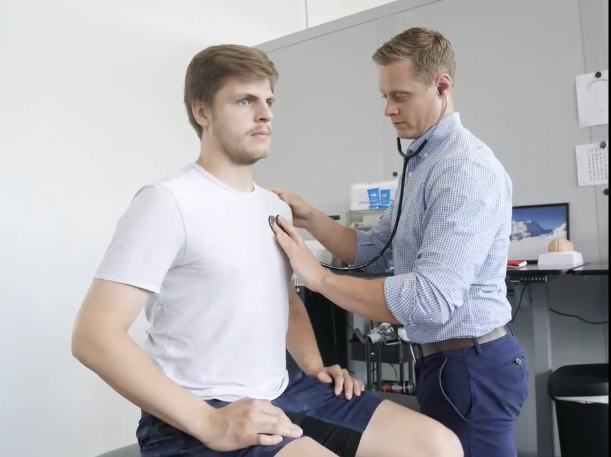
You're probably wondering like, what is functional neurology? Why is it different from my regular neurologist that I go to with my normal hospital, my normal insurance? And then like, why does that matter for me?
So I think it matters mostly for people that have been dealing with chronic illnesses. You've already likely been through a lot of conventional care. You've been to your GP, been to the specialist, tried a lot of things, and it doesn't seem to be working. That's kind of where the story starts for most people.
How I Found Functional Neurology
That's where it started for me. So when I was in college, I had a really good friend who had been sick. And I got so sick of watching her go to specialists and just get no help. And it was always just like, try this med and try that med. And some of them would feel terrible. Some would make her like, you know, moods change and all sorts of things. And then she'd gone into like the holistic route. But as soon as you go into holistic medicine, it was just the wild west.
And I was trying to look for things, and I came across this video. It was actually a PBS special. They had a little trailer of it. It was so compelling to me because it was this guy who was a chiropractor. And at the time, only thing I knew about chiropractors was I had one of my good friends who was a really good football player and he would go to our chiropractor in town and get his back adjusted and like whatever. It made it so his back didn't hurt and we all thought that was great. That's all I knew about chiropractic at the time.
But this particular chiropractor — it showed these three case vignettes of like these profound problems that people were having with like, you know, vertigo and fear and like these things that like people weren't getting better from. They were things that we just kind of assumed at that time like you just lived with. And they walked through following him on like how he was treating these cases. And I was in college and I was really, you know, like taken back by that. And it made me incredibly curious. I ordered the videos. I watched them and was like, “This is what I'm going to do.”
And at that point, like again, I didn't know what functional neurology was, but I knew that for these people that needed chronic help, like this seemed to be a thing that was useful.
It's Not a Weekend Certificate
Sometimes it's kind of lost because you can, you know, you can go and get an acupuncture certificate in like a weekend and then off and running. And so you just don't know how to know — like to what degree is a functional neurologist, like is that a weekend thing to be able to start practicing?
You're really looking at, you know, four years of college, four years of grad school. The neurology program depending on how fast you can get through it is three to four years, and then you have to take the board exams after that. Just to get to the point of being able to like start to practice in neurology took a 12-year process. And then as we keep going, I'm still learning and still evolving that to this day.
“Your body's already got the ability to heal on its own better than anything that we can do, than we can apply to it. So if we really want to try to push people toward healing, we have to somehow partner with that system and not try to overtake it.”
I feel really lucky for that because it gave me a background in looking at problems in a slightly different way. So, we weren't focused on things just in terms of chemistry and like what medication could we use? You know, what's the surgical application here? It was kind of like, well, how is your body already built and what receptors does it have?
And we know that even when we use medications, what we're really relying on is the intrinsic healing power of the body. The thing that was impressed upon me there was your body's already got the ability to heal on its own better than anything that we can do, than we can apply to it. So if we really want to try to push people toward healing, we have to somehow partner with that system and not try to overtake it, but rather try to nudge it or even just like ride it so that people are able to use their own intrinsic healing systems to be able to heal.
How It's Different from Conventional Neurology
With that focus on helping people through chronic brain-related injuries, I constantly come up against this question of like, how are you different from a conventional neurologist? But a lot of it comes down to thinking about pathology or the symptoms people experience on a continuum.
You know, like if you've had a stroke, there's like a fine line of like there is damage to the tissue in your brain, right? If you develop Parkinson's disease, we are at the point where there is damage in your brain. But you can also think about — by the time we get to damage, like there are fewer things that you can do to use your body's intrinsic system to be able to help.
And then when we look at things like concussion, when we look at things like dysautonomia, we realize like we're not really in that space where there is this irreparable damage in the system, but we see that it's just not able to work as effectively as it should.
And most of our conventional medicine and conventional neurology is kind of really built to help manage, like making sure you don't die. And once we get to that point, like it's kind of job well done. And then like, you know, whatever happens from there, you know, we did our job.
And my feeling is like there's so much we can do to help train the brain to be able to add incremental improvements in the way that people feel on a day-to-day basis, the way they operate on a day-to-day basis, the way that they can get more quality of life in the time that they have. And I think that part is really important because it's the part that we don't see as much focus on in conventional routes, but I think is the part that really really matters when you consider the time that we all get to live on the planet.
What We're Actually Trying to Do
So when we think about functional neurology, we're thinking about those cases where it's like, well, what can I do for this person to where as quickly as possible, we can improve their quality of life so that the days, weeks, years, decades that they have on the planet can be as good as they possibly can be.
And I think that that — it feels like pie in the sky maybe to some people, but it's the most important part because every individual person is just trying to like feel good and live their life. And it's really tough when everybody says, “Well, that's as much as we can do for you. Just go on and live that way even though you feel like you're suffering. Maybe you can take this drug and it'll make you, you know, numb the pain.” And I just don't think that's honestly — I just don't think that's enough in the world of chronic illness.
“Every individual person is just trying to like feel good and live their life. And it's really tough when everybody says, 'Well, that's as much as we can do for you.' I just don't think that's enough in the world of chronic illness.”
Building on Top of the Standard of Care
When we're in a hospital system, it's really important that all the physicians kind of hold a standard. There's a standard of care that everybody meets. Whether you're in a rural, you know, small hospital or in a big city at a major institution, you're trying to hold those standards up so that you get the same level of care across the board. It's kind of like McDonald's — you want the same burger everywhere you go. That's really helpful because you don't want people to get worse care based on where they live.
We get to sit on top of that because we get to hold a standard of care, but because we're working with things that are already intrinsic to a person — like we're not giving them drugs, we're not cutting them open, we're not performing surgeries — the risk is incredibly low. So it really gives me the opportunity to expand and look out across research, not just within the US but within other countries, and be able to see what they're doing on a physical basis across different disciplines — like what are they doing in cardiology? What are ENTs up to? What are people noticing in the field of neurology across the board?
And then we can take those things and then move them into how we evaluate a patient and say, is there a crossover here? Is there a way that we can implement what they're doing there, measure it with the tools that we have now, and then be able to see a change in outcomes? And then we can iterate around that loop even more because we can always be pulling different modalities in.
It's like if you were a trainer, you know, you can stick to the bench press, but every once in a while you might want to put somebody on an unstable surface or use a different kind of a barbell or whatever. You get the ability to be able to challenge the body in different ways and then turn around and measure that again to be able to understand, you know, what are the best ways to go so we can iterate faster.
But it also means that we don't have to wait around and make sure that everything's okay, which can burn decades while we already know a thing works, but we have to wait for it to trickle down into the standard of care before people can use it. And I think that that's just too slow for people that are sick right now.
Why Fast Feedback Loops Matter
We are looking at the body as a whole and trying to see how do we optimize function within the system so that people have the best quality of life as quickly as possible. So, because we're kind of sharing it in like a physical medicine space, functional neurology tends to get lumped in with PT and vestibular rehab and some of these other protocols that I think are wonderful — don't get me wrong — but I think where functional neurologists stand out is in the ability to get feedback fast.
And what I mean by that is, typically if you've got a problem — let's say you're dizzy, right? You get dizzy, you go to the ENT. The ENT says, “Hey, you need to go to vestibular rehab.” And when they do that though, you're kind of writing the script and then sending them off to go do this other thing. And the vestibular rehab person is going to say, “Okay, I got this prescription. I'm going to run you through my protocol.” The reality is, the diagnostic process happened with the ENT and then there's a split between what's going to then happen with the PT, and you don't know how well those things are going to merge.
With functional neurology, the bulk of the process is spent on being able to diagnose in a very nuanced manner and then you're rechecking that with the therapy. So there's this constant loop where you're measuring something, providing an input, and then re-measuring it. And you're just trying to take that spiral up. So I measure something, provide an input, and I want to see that measurement get better. And I want to just corkscrew that thing all the way up into improvement. And I get the fast iteration to be able to do that. I can see what doesn't work. I can see what works and we can move very quickly.
“If I'm an ENT and I send you to PT and then 8 weeks later you check back in with me and you're like, 'I'm still not feeling well' — you have no idea what happened at vestibular rehab. You don't know if they played pickleball or if they did head movements or what.”
But if I'm an ENT and I send you to PT and then 8 weeks later you check back in with me as an ENT and you're like, “I'm still not feeling well” — you have no idea what happened at vestibular rehab. You don't know if they played pickleball or if they did head movements or what. So being able to stay tight in that loop, I think, is the thing that makes the biggest difference for functional neurologists.
Curious About Functional Neurology?
If you've been through conventional care and you're still not where you want to be, a free consultation call can help figure out whether a brain-based approach fits your situation.
Schedule a Free Consultation